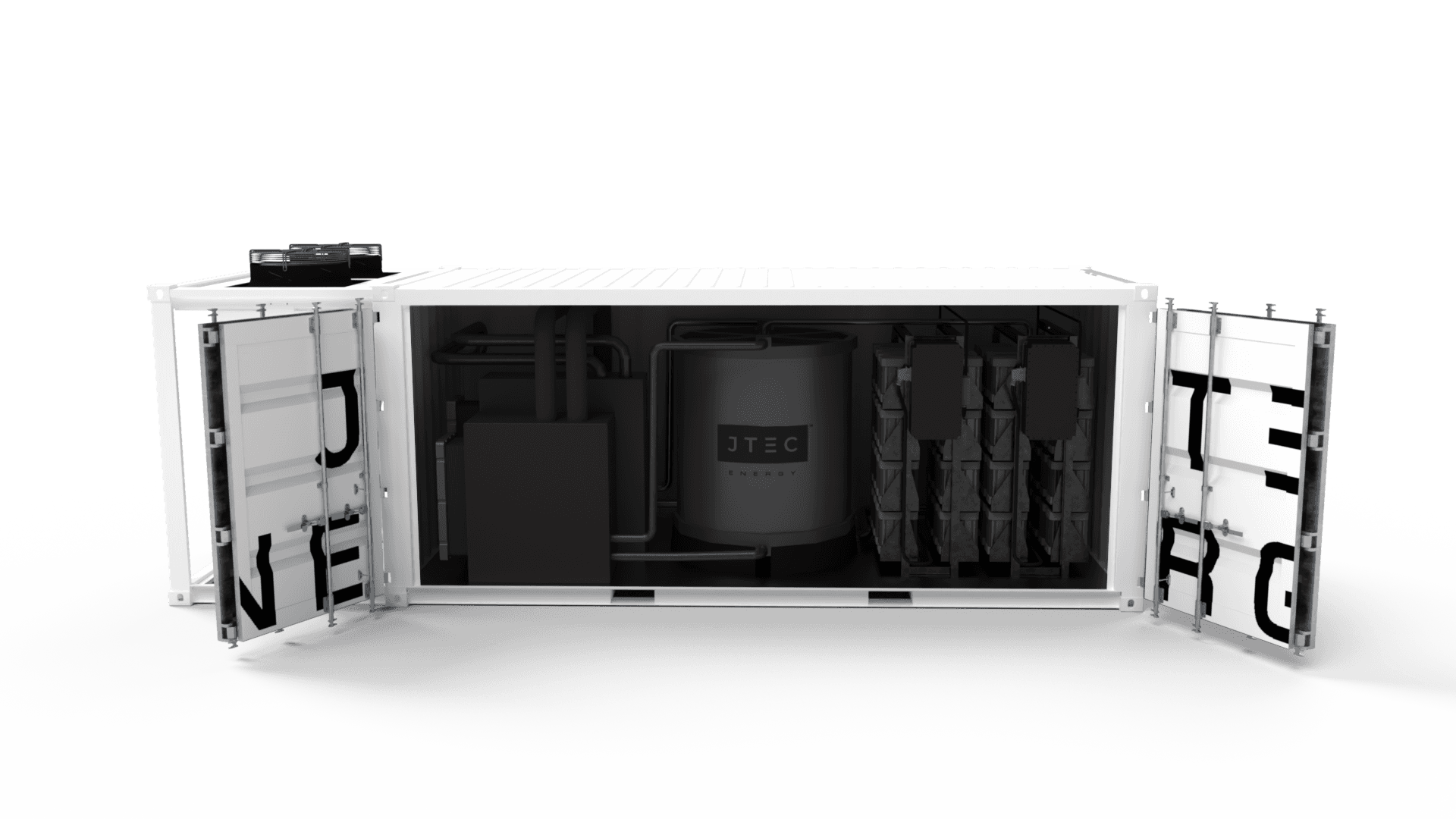
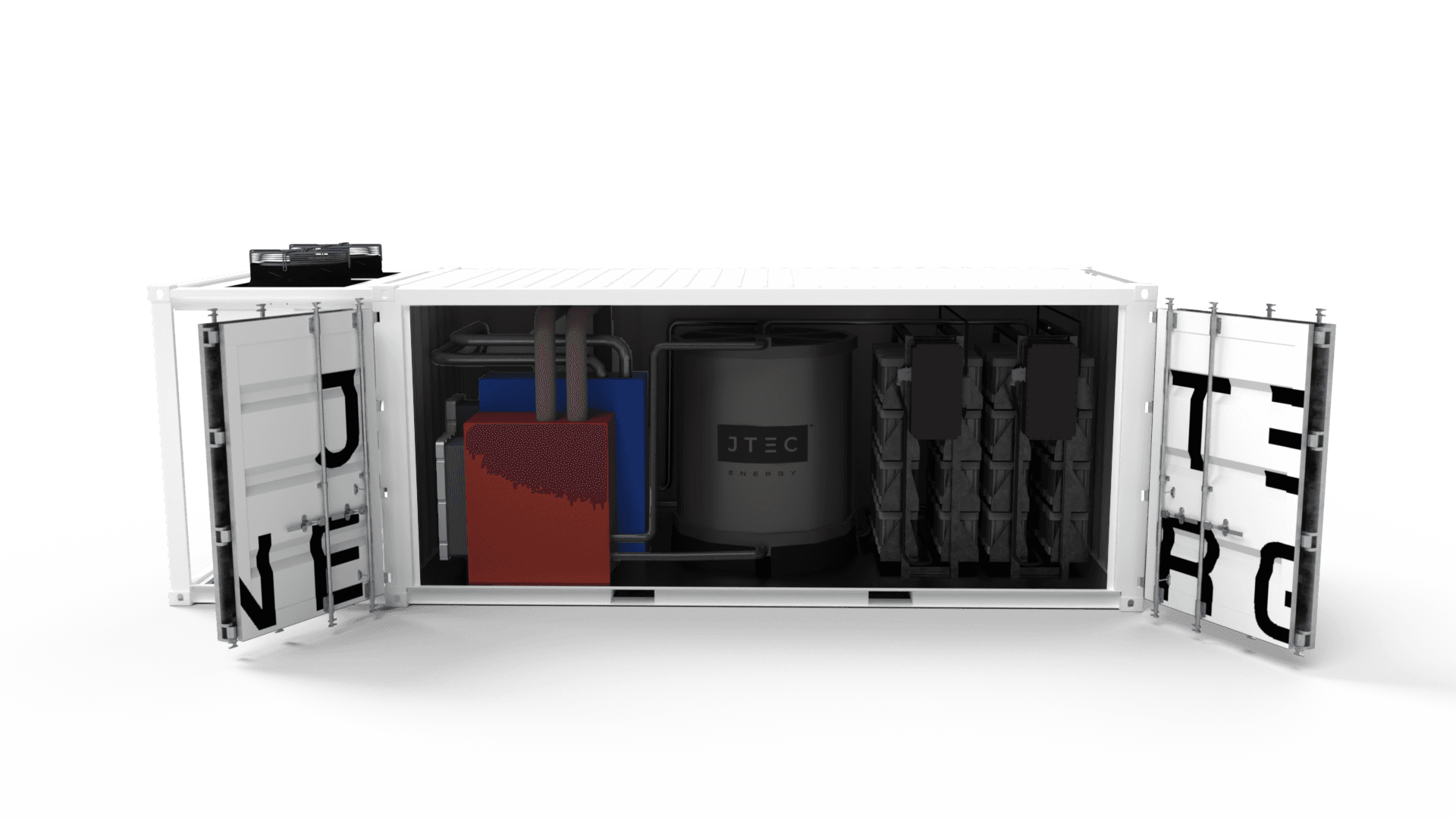
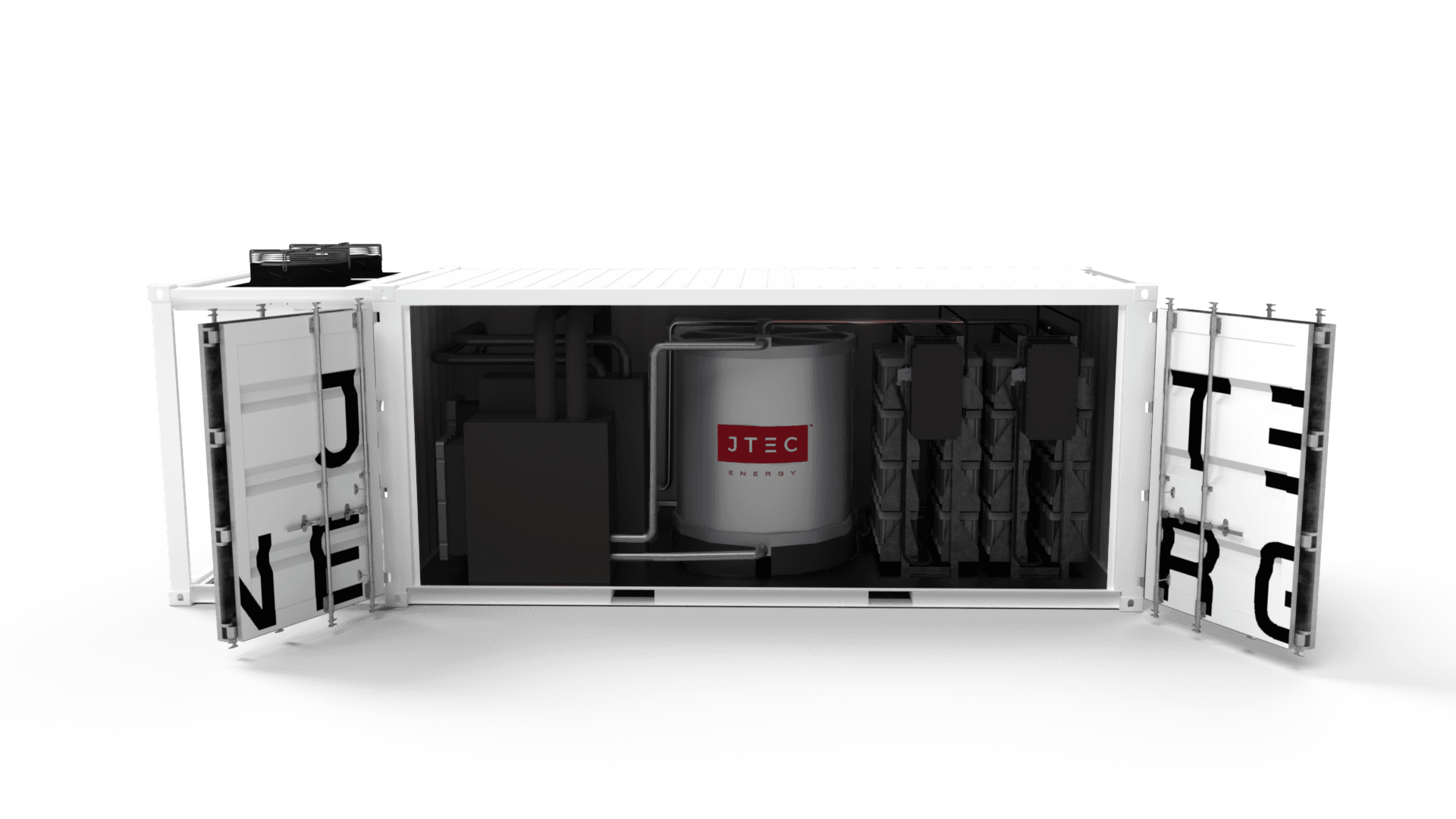
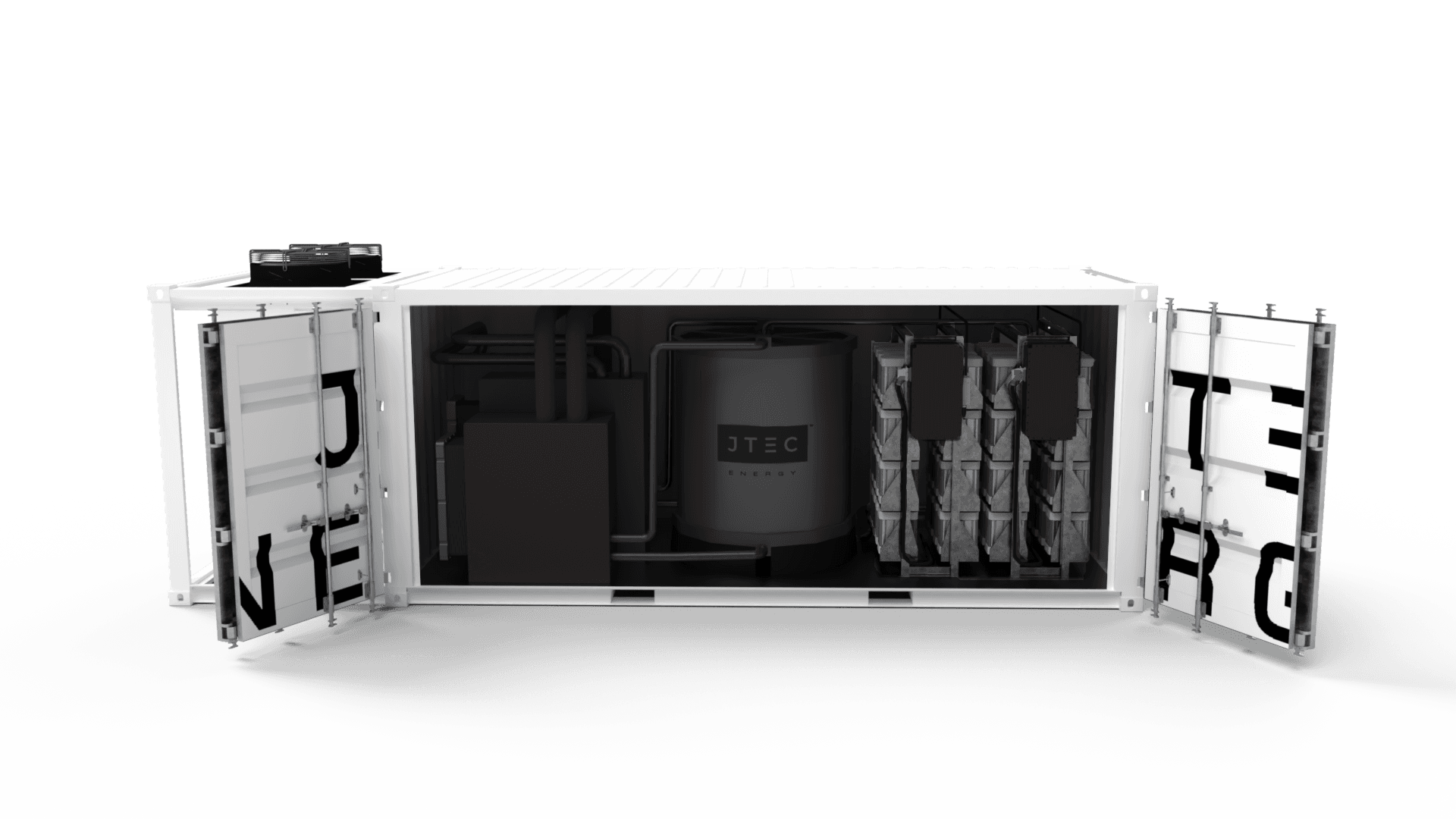
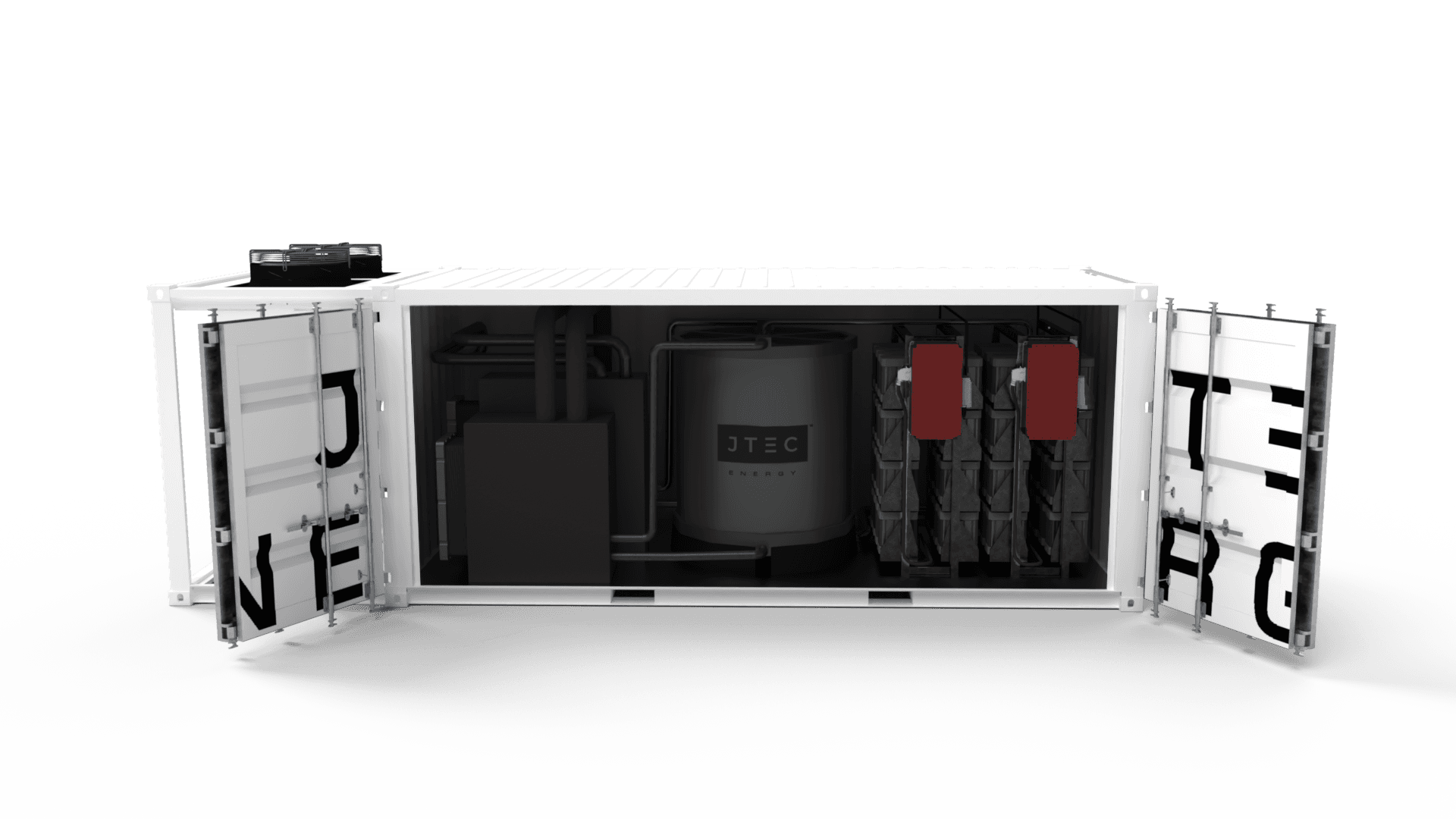
The JTEC harvests thermal energy to create electricity.
To view a 5-minute video explaining how the JTEC works, visit here.

A schematic of the JTEC device is shown above.

In the device, there is a hot side (right) and a cool side (left). Each side contains a Membrane Electrode Assembly (MEA) stack consisting of a proton-conducting membrane and porous electrodes on the top and bottom. The proton-conducting membranes separate regions that contain hydrogen (H2) gas with different pressures, and they are permeable to protons (H+) but are largely impermeable to H2 gas.

The bottom region contains high pressure and the top region contains low pressure.

During operation, H2 gas on the hot (right) side of the device is oxidized in the high-pressure region, and the resulting H+ ions travel through the membrane and are reduced to H2 at the low- pressure region. This is a spontaneous process driven by the pressure gradient. Simultaneously, the reaction is driven in reverse at the low-temperature (left) side: the H2 gas is oxidized in the low-pressure region, and the resulting H+ ions travel through the membrane and are reduced to H2 at the high-pressure region.

This process is not spontaneous, but some of the voltage produced on the hot side is used to drive this process at the cold side. The reason this device is able to operate is because the open-circuit voltage (Voc) produced at the high-temperature side is greater than that required to drive the reaction in reverse at the low-temperature side.

Thus, the device operates by continuously moving the hydrogen gas from high to low pressure and back again, while the excess electrical energy produced during this process can be used to do useful work. The device uses highly reversible electrochemical reactions and a temperature differential to pressurize gas, which can result in efficient conversion of thermal to electrical energy.

When used in reverse - it uses electrical energy for highly efficient air conditioning and refrigeration applications.

The device uses electrochemical reactions at different temperatures and pressures to create a potential difference, which can be harnessed to drive electrical current. It has the potential to generate electricity more efficiently than any device in use today.

The JTEC operates in a closed, sealed environment; it does not need fuel added. It is scalable; it can be made small enough to harness body heat and power a wearable device, or large enough to capture waste heat from an industrial factory and convert it to usable electricity.

Deeper Dive

The January 2020 issue of Applied Energy Materials features a closer look at the JTEC technology:

ACS Applied Energy Materials January 2020

Fei Huang, Andrew T. Pingitore, Tedric Campbell, Andrew Knight, David Johnson,
Lonnie G. Johnson, and Brian C. Benicewicz. A Thermoelectrochemical Converter Using High-Temperature Polybenzimidazole (PBI) Membranes for Harvesting Heat Energy. ACS Applied Energy Materials 2020 3 (1), 614-624. DOI: 10.1021/acsaem.9b01830

A Thermoelectrochemical Converter Using High-Temperature Polybenzimidazole (PBI) Membranes for Harvesting Heat Energy

To meet the rising energy demand and efficiently utilize a larger amount of waste heat energy from various devices and systems, here we report an innovative hermoelectrochemical converter which utilizes the electrochemical potential of a hydrogen pressure differential applied across a proton conductive membrane. The amount of energy available to the external load is the difference in electrical potential between that generated during a high-temperature expansion stage and that required during a low-temperature compression stage.

In this work, various phosphoric acid (PA)-doped polybenzimidazole (PBI) membranes, DiOH-PBI, para-PBI, and m/p-PBI, are prepared via the poly(phosphoric acid) (PPA) process and investigated to understand how the membrane chemistry affected device performance. When operating a laboratory scale device at 20 °C/200 °C and a pressure ratio of 770, DiOH-PBI exhibited the best performance (maximum current density of 43 mA/cm2, peak power density of 0.52 mW/cm2, and net efficiency of 17.1%) as compared with the other two PBIs due to its high proton conductivity. Further increases in temperature or pressure differentials are expected to significantly improve the device output.

All the reported results are consistent with the Nernst equation and thus further confirm the working principle of the thermoelectric conversion technique. This transformational approach may allow for efficient generation of electricity from many diverse forms of waste heat.

Applications

The JTEC offers highly efficient energy production in nearly any application where a heat or pressure differential is present.

Solar Applications

Solar-Thermal Farms

The JTEC has the potential to be the most efficient device to convert solar thermal energy to electric energy.

Geothermal

Geothermal

Several Geothermal companies are effectively bringing heat to the surface for conversion.
JTEC can increase these conversion rates by 50%.

Computers & Server Farms

Giving server farms the ability to use the waste heat produced by the servers to actually cool the rooms in which the servers are housed creates amazing potential from both a cost and location perspective. No longer would server farms need to be housed in remote locations if self-cooled through the use of the JTEC device.

Nuclear Applications

Nuclear Power Plants

Nuclear power plants expend an enormous amount of energy cooling the reactors. With the JTEC, the heat created by the reactors could be absorbed and converted into clean energy in the form of electricity to help power the plant. This represents dual cost savings: reduction in cooling costs and reduction in other electricity costs.

JTEC Energy has worked with partners in Government, Education and Business.

NASA
Johns Hopkins Applied Physics Laboratory